What the Industrial Revolution Can Teach Us About Digital Transformation Today


Introduction
As America celebrates 250 years of innovation, we find ourselves in the midst of another defining era: the Digital Revolution. Artificial intelligence, automation, cloud computing, and machine learning are reshaping every facet of life, from how we work to how we connect, learn, and heal. Yet in our race to digitize everything, there’s a crucial question we must ask:
What did the first great transformation teach us, and are we listening?
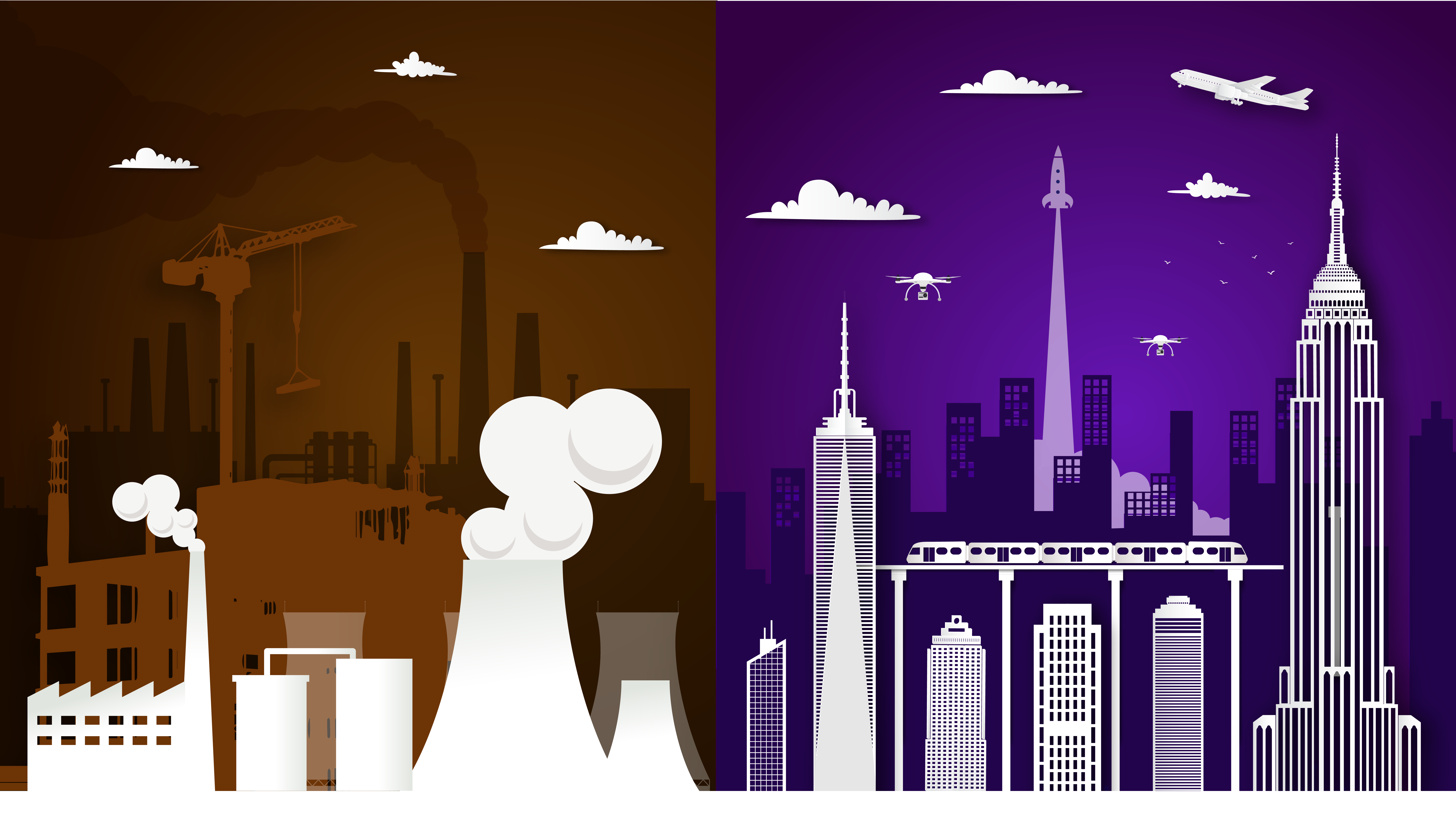
The Industrial Revolution of the 18th and 19th centuries sparked an explosion in productivity, urbanization, and wealth. But it also introduced unforeseen consequences: vast social displacement, labor exploitation, and environmental degradation. Then, as now, many of the most groundbreaking innovations carried a double edge, ushering progress while leaving scars that would take generations to heal.
By looking back at the missteps, blind spots, and ethical oversights of the Industrial Age, we can better navigate the digital one. This reflection is not about slowing progress, but about shaping it wisely, building systems that are not only efficient, but ethical, inclusive, and sustainable.
The Industrial Revolution: Innovation with Consequences
Mechanization and the Human Cost
The steam engine, mechanized textile mills, and railroads transformed production. Goods became cheaper, supply chains extended across oceans, and entire industries rose seemingly overnight.
But these gains came at a cost. Factory labor conditions were brutal, long hours, low wages, and dangerous environments were common. Children were pulled into the labor force, while working-class families were displaced as rural economies gave way to urban industry.
The era revealed how technology implemented without foresight or empathy can deepen inequality and disrupt social stability. Mechanization didn’t just reshape economies, it reshaped identities, communities, and power structures.
Environmental Oversight and the Price of Progress
The Industrial Revolution marked the beginning of large-scale fossil fuel consumption. Coal-powered factories, locomotives, and heating systems turned cities into smog-choked zones. Rivers were contaminated with industrial waste. Deforestation accelerated to meet the demand for raw materials.
One of the most striking examples of unethical innovation was the work of Thomas Midgley Jr., a prolific inventor whose contributions highlight the dark side of unchecked technological ambition. Midgley created leaded petrol, a fuel additive that boosted engine performance, but released toxic lead into the atmosphere, harming generations. Later, he invented chlorofluorocarbons (CFCs), used in refrigeration, which would eventually be identified as major contributors to the depletion of Earth’s ozone layer.
Parallels to the Digital Revolution
Today’s digital transformation is driven not by steam and steel, but by data, algorithms, and connectivity. Yet the risks we face are eerily similar.
Digital Displacement
AI and automation are streamlining processes and driving new efficiencies, but they’re also displacing jobs, particularly in repetitive, lower-wage sectors. As companies retool their workforces with digital tools, many workers are left behind, struggling to reskill or find relevance in a tech-driven economy.
Just as mechanization redefined labor in the 1800s, today’s digital shift is redefining what it means to be productive. Without proactive support systems, like upskilling programs, inclusive hiring, and equitable tech access, entire populations risk marginalization.
Data Exploitation and Ethics
Where the Industrial Age exploited physical labor, the Digital Age risks exploiting personal data. The mass collection of user information, opaque AI decision-making, and surveillance capitalism are modern-day ethical flashpoints.
Just as leaded petrol was once promoted without transparency, today’s algorithms are often deployed without clear accountability or understanding of their social impact, leading to discrimination, misinformation, and privacy breaches.
Environmental Footprint of Digital Infrastructure
Though digital systems are intangible, they rely on very tangible energy demands. Data centers, crypto mining, and cloud infrastructure consume massive amounts of electricity, some rivaling the emissions of mid-sized countries.
The illusion that digital is “clean” ignores the carbon and water footprints of the physical systems supporting it. If left unchecked, the digital economy could become a silent contributor to climate risk.
Lessons from the Past: How to Build Better Today
Think Beyond Efficiency, Design for Equity
The first industrial wave prioritized output over people. The digital wave must reverse that: start with human impact, then build.
- Embed DEI (Diversity, Equity, Inclusion) in every transformation strategy.
- Use technology to amplify access, not gatekeep opportunity.
- Ensure marginalized communities are co-creators, not just recipients, of digital innovation.
Make Ethics a Core Part of Innovation
Technology is never neutral. Every line of code reflects a decision about what to prioritize, whom to serve, and what to exclude.
- Apply AI ethics frameworks before deploying intelligent systems.
- Prioritize transparency and explainability in algorithmic design.
- Build multi-disciplinary teams that include ethicists, social scientists, and environmental experts, not just engineers.
Regulate Proactively, Not Reactively
The Industrial Age lacked the foresight to regulate until harm was evident. We can’t afford that delay today.
- Craft forward-thinking policies around data governance, AI accountability, and environmental sustainability.
- Encourage cross-sector alliances to define and enforce ethical digital standards.
- Incentivize innovation that serves the public good, not just shareholder return
Reimagine Labor, Not Just Automate It
AI is not a replacement; it’s a tool. Organizations must rethink roles and workflows to make the most of human-AI collaboration.
- Invest in reskilling and continuous learning for employees.
- Use automation to eliminate drudgery, not meaning.
- Design future jobs that are creative, cognitive, and human-centered.
How Cogent Infotech Is Helping Organizations Transform Responsibly
At Cogent Infotech, we believe transformation is not just a technical upgrade; it’s a cultural, ethical, and strategic shift. That’s why we work with public and private organizations across America to implement people-first digital solutions that drive impact without compromising values.
Here’s how we approach it:
Digital Readiness Assessments
We evaluate not just technical capacity, but workforce adaptability, data governance, and culture to ensure a balanced transformation roadmap.
Responsible AI Design
Our AI solutions are built with bias checks, transparency standards, and performance audits, so clients can scale without ethical blind spots.
Upskilling and Workforce Enablement
We don’t just automate, we retrain, reskill, and help organizations reimagine talent strategies to prepare workers for the digital age.
Sustainability-Focused Solutions
From cloud optimization to energy-efficient software architecture, our solutions are designed to reduce environmental impact while boosting performance.
With over 21 years of experience and 10,000+ completed projects, Cogent Infotech is proud to be part of America's innovation journey and committed to helping clients build responsibly, for the long term.
Final Reflection: Innovating for 250 Years and Beyond
Innovation is a powerful force, but history shows us that its intent must match its impact.
The Industrial Revolution taught us that unregulated ambition, no matter how brilliant, can lead to deep, lasting harm. As we digitize our economies, automate our institutions, and virtualize our lives, we have a choice:
- Repeat the mistakes of the past in a faster, more automated form
- Or learn, adapt, and lead with ethics, empathy, and foresight
By honoring the past and building responsibly today, we can ensure that America’s digital future is not just advanced, but also just, inclusive, and sustainable.
250 years of progress, shaped by people, powered by ideas.
Let’s make the next 250 even better.
#InnovatingAmerica250
Real-World Journeys