Cloud Trends in 2026: Multi‑Cloud, Edge, Serverless & What It Means for US Businesses



Introduction
Cloud computing in the United States has moved decisively beyond its early role as a cost-saving IT alternative. By 2026, cloud adoption was deeply intertwined with business strategy, competitive differentiation, and long-term resilience. Organizations across industries now depend on cloud platforms to launch products faster, analyze customer behavior in real time, support distributed workforces, and meet rising regulatory expectations.
This shift did not happen in isolation. The digital economy continued to expand rapidly in 2026, driven by AI adoption, platform-based business models, and increasingly digital customer interactions. Enterprises now operate in environments where users expect seamless experiences, uninterrupted availability, and personalization by default. Legacy, on-premise systems struggle to meet these demands at scale.
At the same time, cloud environments became more complex. Workloads span legacy systems, modern applications, and data-intensive AI models. Security threats grew more sophisticated. Regulatory scrutiny around data protection, privacy, and operational resilience intensified. In response, organizations began rethinking how they architect, govern, and operate cloud environments.
This blog examines how cloud adoption evolved in 2026, focusing on multi-cloud strategies, edge computing, and serverless architectures. It explains why these models gained traction, how US enterprises applied them in practice, and what lessons emerged from real-world deployments. The final sections look ahead to 2026, outlining expected trends and strategic considerations for organizations planning their next phase of cloud transformation.
The Cloud Landscape in the US: What Changed in 2026
By 2026, cloud adoption in the US reached a clear stage of maturity. Early phases focused on moving workloads out of on-premise data centers to gain speed and reduce infrastructure costs. In contrast, organizations in 2026 approached the cloud as a long-term business platform. Decision-making shifted toward optimization, governance, and measurable value realization, reflecting a deeper understanding of how cloud capabilities influence growth, resilience, and competitiveness.
The most significant changes during this phase included:
- Shift from migration to value realization
Enterprises moved beyond lift-and-shift strategies and began redesigning applications to fully leverage cloud-native capabilities. Teams focused on performance, availability, and business alignment rather than simple relocation. - Business outcomes replaced technical metrics
Cloud success became measured by faster time-to-market, improved customer experience, higher system reliability, and operational agility. Technical indicators remained important, but they no longer defined success in isolation. - Greater involvement of senior leadership
Cloud decisions increasingly involved CEOs, CFOs, and business heads alongside technology teams. This ensured alignment with revenue growth, risk management, regulatory readiness, and long-term scalability. - Regulatory and risk considerations shaped the architecture
Data privacy, industry compliance, and operational resilience influenced cloud design. Decisions around data classification, encryption, access control, and auditability became foundational. - Governance became a design priority
Enterprises embedded cost controls, identity management, and observability into architectures from the start, reducing corrective work later and improving transparency. - Talent constraints influenced platform choices
Limited availability of experienced cloud professionals pushed organizations to standardize tools, automate operations, and simplify architectures. Reducing unnecessary complexity became essential for sustainability.
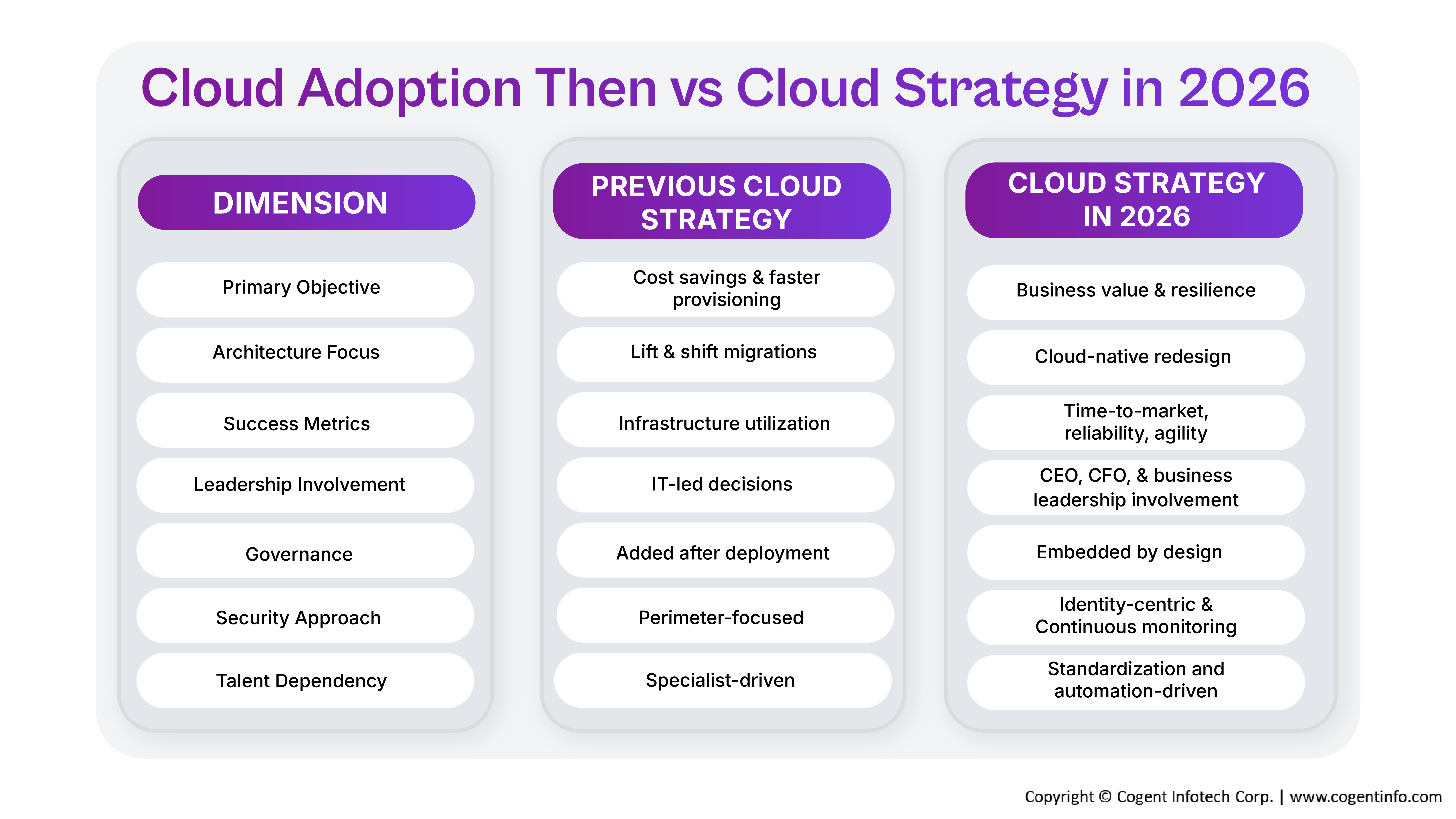
Together, these shifts created the conditions for broader adoption of multi-cloud strategies, edge computing, and serverless architectures across US enterprises.
Multi-Cloud Strategies: From Risk Mitigation to Business Enablement
As cloud usage expanded, US enterprises increasingly adopted multi-cloud strategies to support flexibility, resilience, and innovation. Rather than treating multi-cloud purely as protection against vendor lock-in, organizations began using it as a way to align workloads with the strengths of different platforms.
Enterprises adopted multi-cloud for several strategic reasons:
- Leveraging specialized strengths across providers
Cloud platforms offer distinct advantages in analytics, AI services, geographic coverage, and compliance tooling. Organizations place workloads where they perform best instead of forcing uniform deployment. - Avoiding architectural compromise
Teams prevent suboptimal designs by matching applications to the most suitable environments, improving performance and long-term adaptability. - Strengthening resilience and continuity
Multi-cloud architectures reduce dependency on single-vendor roadmaps, pricing changes, and outages, supporting business continuity.
Industry Drivers in the US
Multi-cloud adoption varies by industry, shaped by operational and regulatory realities:
- Financial services
Sensitive workloads prioritize regulatory compliance, data classification, and operational resilience, while innovation teams leverage advanced analytics and AI services. - Healthcare and life sciences
Privacy mandates and interoperability requirements influence data placement, security design, and vendor choice. - Retail and e-commerce
Multi-cloud improves availability during peak demand, supports rapid scaling, and reduces risk during high-traffic events. - Manufacturing and logistics
Different providers support ERP systems, IoT analytics, supply chain visibility, and operational intelligence.
Operating Multi-Cloud Environments Effectively
Success depends on operational discipline:
- Clear workload placement rules
Defined guidelines prevent fragmentation and ensure workloads run on appropriate platforms. - Centralized identity and access management
Unified controls enforce consistent security across providers. - Standardized deployment pipelines
Common practices simplify application management and reduce friction. - Unified monitoring and observability
Central visibility enables performance and security tracking across platforms. - FinOps for cost accountability
Financial governance aligns cloud spend with business value.
Organizations that treat multi-cloud as an operating model, rather than a tooling choice, achieve greater control, resilience, and long-term flexibility.
Edge Computing: Turning Real-Time Data into Action
Edge computing gained significant momentum in 2026 as organizations sought faster insights and greater reliability. Processing data closer to its source allowed enterprises to reduce latency, improve responsiveness, and maintain operations even when connectivity was inconsistent.
Why Edge Computing Became Essential
Several operational and geographic factors made edge computing particularly relevant in the business context:
- Lower latency for time-sensitive applications
Local processing supports rapid decision-making for use cases such as fraud detection, equipment monitoring, and real-time customer interactions. - Operational continuity in distributed environments
Edge systems allow critical functions to continue during network disruptions, which is vital for field operations, retail locations, and industrial sites. - Optimized bandwidth usage and cost control
Processing data locally reduces the need to transmit large volumes of information to centralized platforms. - Improved real-time responsiveness
Immediate insights enhance both customer-facing experiences and internal efficiency.
Industry-Specific Use Cases Across the US
Edge computing delivered measurable value across sectors:
- Manufacturing
Real-time equipment monitoring, predictive maintenance, and anomaly detection reduced downtime and improved productivity. - Retail
In-store analytics enabled personalized experiences and smoother operations, even during connectivity interruptions. - Logistics and transportation
Route optimization and real-time tracking improved delivery accuracy and asset utilization. - Healthcare
Edge-enabled diagnostics processed sensitive data quickly while supporting privacy and compliance requirements. - Telecommunications and media
Edge infrastructure supported low-latency services, streaming workloads, and emerging applications.
Managing Edge Deployments at Scale
Scaling edge environments required careful planning and governance:
- Expanded security and monitoring needs
Distributed systems increase the attack surface and demand consistent controls. - Rigorous patching and update processes
Regular updates are essential to prevent vulnerabilities across devices. - Centralized management with local execution
Central platforms provide visibility and policy enforcement while preserving performance. - Balanced control and autonomy
Enterprises maintain governance without sacrificing speed or reliability.
Organizations increasingly favored partners and platforms that seamlessly integrated edge and cloud management, enabling consistent operations at scale.
Serverless Architectures: Accelerating Innovation
Moving Beyond Infrastructure Management
Serverless computing redefined how development teams built applications in 2026. By abstracting infrastructure concerns, serverless platforms allowed teams to focus on functionality, performance, and user experience.
This model aligned well with agile development practices and continuous delivery pipelines. Teams deployed updates faster and scaled automatically as demand increased.
Adoption Patterns
Financial services organizations use serverless functions for transaction processing, data validation, and real‑time alerts. Media and entertainment companies relied on serverless backends to handle unpredictable traffic spikes.
Public sector initiatives explored serverless models to support citizen services with variable usage patterns, reducing infrastructure overhead while maintaining reliability.
Governance and Cost Discipline
While serverless reduced operational complexity, it required careful governance. Inefficient design could lead to unexpected costs or performance bottlenecks.
In 2026, mature organizations established architectural guidelines, closely monitored usage, and integrated serverless workloads into broader cost management frameworks.
Security and Compliance in a Distributed Cloud World
Security as a Foundational Design Principle
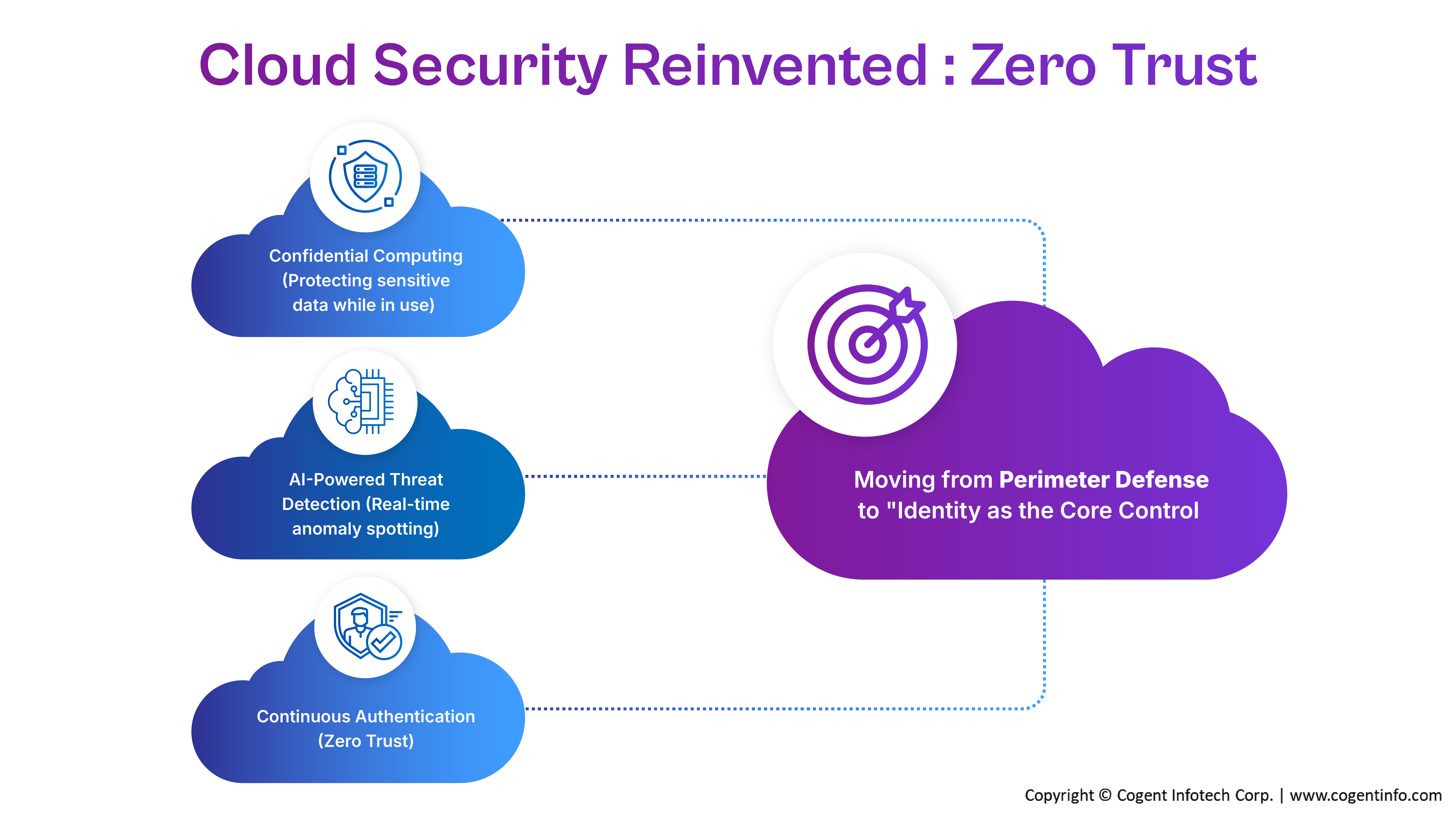
Security considerations shaped every aspect of cloud strategy in 2026, where enterprises embraced identity‑centric security models and continuous monitoring practices.
Multi‑cloud and edge environments require consistent security policies across platforms. Organizations invested in centralized visibility tools to detect anomalies and respond quickly.
Aligning with Regulatory Expectations
Clearer enforcement of data protection regulations influenced how organizations classified and handled data. Encryption, audit logging, and access controls became standard design elements.
Rather than slowing innovation, these practices built trust with customers, partners, and regulators.
Talent, Operating Models, and Business Impact
Talent Realities and Skill Development in 2026
Cloud adoption accelerated faster than the availability of skilled professionals, forcing organizations to rethink how they build and sustain cloud expertise.
- Hiring alone proved insufficient to meet cloud skill demand
As cloud environments became more complex with multi-cloud, edge, and security requirements, enterprises realized that recruiting specialists could not scale fast enough or remain cost-effective. - Internal upskilling became a strategic priority
Organizations invested in structured training programs, hands-on learning, and certification pathways to develop cloud capabilities within existing teams, reducing long-term dependency on external hiring. - Automation and standardization reduced skill dependency
By using infrastructure-as-code, automated security controls, and standardized templates, enterprises minimized manual intervention and lowered the expertise threshold required to operate cloud environments.
Evolution of Cloud Operating Models
To manage scale and complexity, businesses began redesigning how teams worked with cloud platforms rather than simply expanding infrastructure teams.
- Shift from infrastructure-centric to product-centric teams
Organizations restructured teams around business products and services, combining development, operations, and security capabilities to improve ownership and delivery speed. - Emergence of platform teams as enablers
Platform teams provided shared cloud services, governance frameworks, and self-service tools, allowing application teams to innovate while adhering to organizational standards. - Clear accountability improved execution and reliability
Defined ownership models reduced ambiguity around performance, security, and cost management, enabling faster decision-making and more reliable operations.
Role of Technology Partners in Cloud Maturity
As cloud strategies matured, enterprises relied more heavily on partners to navigate operational complexity and long-term optimization.
- Partners supported operating model design, not just migration
Technology providers helped organizations establish governance frameworks, security practices, and cloud management processes that extended beyond initial adoption phases. - Operational support allowed internal teams to focus on innovation
By offloading routine operations, monitoring, and optimization tasks, enterprises freed internal resources to concentrate on business differentiation and customer value. - Industry-specific expertise added measurable value
Partners with domain knowledge enabled faster alignment between cloud architecture and sector-specific requirements, particularly in regulated industries.
Business Implications of Cloud Maturity
The way organizations approached talent and operating models directly influenced the business value they derived from cloud investments.
- Aligned cloud strategies delivered tangible business outcomes
Enterprises that linked cloud initiatives to business goals achieved faster innovation cycles, improved resilience, and better customer experiences. - Fragmented adoption increased cost and risk
Organizations that treated cloud as an isolated technology project faced rising complexity, cost overruns, and security gaps as environments scaled. - Cloud maturity became a competitive differentiator
For enterprises operating in both domestic and global markets, the ability to manage cloud environments effectively influences scalability, trust, and long-term growth potential.
Looking Ahead to 2026: What Comes Next
As US enterprises move into 2026, cloud computing will continue to evolve from an enabling technology into a foundational business capability. The focus will shift from adoption and experimentation to refinement, integration, and long-term value creation. Cloud platforms will increasingly serve as the backbone for intelligence, automation, and scalable digital services rather than operating as standalone infrastructure layers.
Several developments will shape this next phase. Deeper integration of AI into cloud environments will allow organizations to embed intelligence directly into applications and operations. Sustainability considerations will play a larger role in cloud decision-making, influencing how enterprises evaluate efficiency, energy consumption, and long-term impact. Platform engineering approaches will gain momentum as organizations seek to reduce complexity, standardize cloud usage, and provide development teams with consistent guardrails for innovation.
The cloud landscape reached a critical inflection point in 2026. Multi-cloud strategies matured into intentional architectures, edge computing demonstrated its real-time value, and serverless models accelerated innovation across industries. As organizations prepare for 2026, disciplined execution, skilled talent, and strong partnerships will determine success.
Cloud computing will remain central to digital transformation in the US, enabling enterprises to scale with confidence, adapt quickly, and compete effectively in an increasingly platform-driven economy.
Ready to accelerate your cloud transformation?
Contact Cogent Infotech today to explore how multi-cloud, edge computing, and serverless architectures can drive innovation and scalability for your business.